Кой излиза с Реймон Радиге?
Beatrice Hastings от Реймон Радиге от ? до ?. Разликата във възрастта беше 24 години, 4 месеца и 22 дни.
Irène Lagut от Реймон Радиге от ? до ?. Разликата във възрастта беше 10 години, 5 месеца и 15 дни.
Jean Cocteau от Реймон Радиге от до . Разликата във възрастта беше 13 години, 11 месеца и 13 дни.
Реймон Радиге

Реймо̀н Радигѐ (на френски: Raymond Radiguet) е френски писател.
Прочетете повече...Beatrice Hastings

Beatrice Hastings era el seudónimo de Emily Alice Haigh (27 de enero de 1879 – 30 de octubre de 1943) una escritora inglesa, poeta y crítica literaria. Mucho de su trabajo fue publicado en The New Age bajo una variedad de seudónimos. Vivió con el editor A. R. Orage un tiempo, antes del estallido de la Primera Guerra Mundial. Fue amiga y amante de Katherine Mansfield, cuyo trabajo fue publicado por primera vez en The New Age. Otro de sus amantes fue Wyndham Lewis.
Прочетете повече...Реймон Радиге
Irène Lagut

Marie-Reine Onasime Lagut, dite Irène Lagut, née le à Sucy-en-Brie et morte dans sa 102e année, le à la Maison russe de Menton, est une peintre française, élève de Picasso. Elle peignit essentiellement des têtes de femmes, des enfants et des arlequins. Elle figura à partir de 1920 au Salon de la Société des artistes indépendants.
Прочетете повече...Реймон Радиге
Jean Cocteau
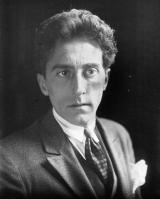
Jean Maurice Eugène Clément Cocteau (UK: KOK-toh, US: kok-TOH; French: [ʒɑ̃ mɔʁis øʒɛn klemɑ̃ kɔkto]; 5 July 1889 – 11 October 1963) was a French poet, playwright, novelist, designer, film director, visual artist and critic. He was one of the foremost avant-garde artists of the 20th century and highly influential on the Surrealist and Dadaist movements, among others. The National Observer suggested that "of the artistic generation whose daring gave birth to Twentieth Century Art, Cocteau came closest to being a Renaissance man".
He is most notable for his novels Le Grand Écart (1923), Le Livre blanc (1928), and Les Enfants Terribles (1929); the stage plays La Voix Humaine (1930), La Machine Infernale (1934), Les Parents terribles (1938), La Machine à écrire (1941), and L'Aigle à deux têtes (1946); and the films The Blood of a Poet (1930), Les Parents Terribles (1948), Beauty and the Beast (1946), Orpheus (1950), and Testament of Orpheus (1960), which alongside Blood of a Poet and Orpheus constitute the so-called Orphic Trilogy. He was described as "one of [the] avant-garde's most successful and influential filmmakers" by AllMovie. Cocteau, according to Annette Insdorf, "left behind a body of work unequalled for its variety of artistic expression".
Though his body of work encompassed many different media, Cocteau insisted on calling himself a poet, classifying the great variety of his works — poems, novels, plays, essays, drawings, films — as poésie, poésie de roman, poésie de thêatre, poésie critique, poésie graphique and poésie cinématographique.
Прочетете повече...